
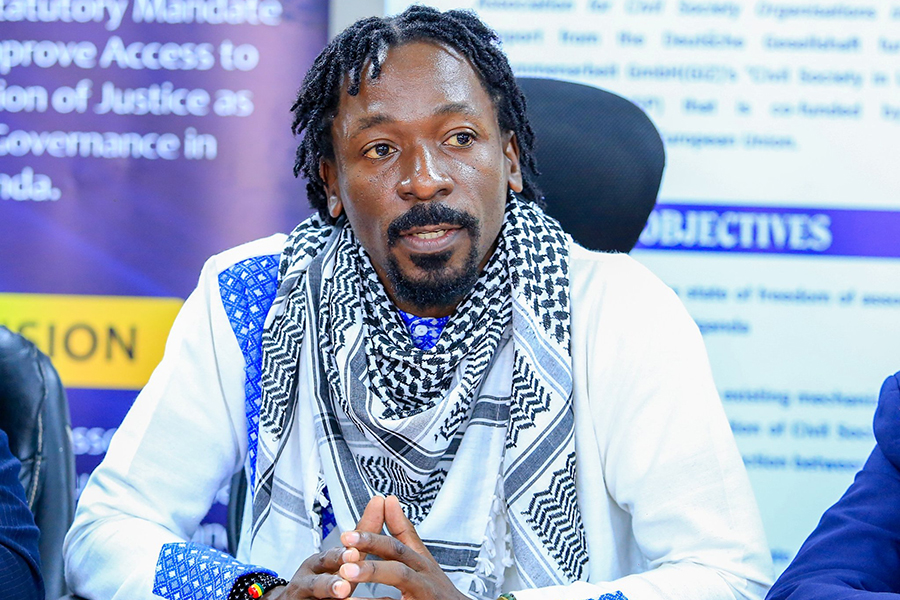
The Uganda Law Society has strongly criticised the Inspectorate of Government over what it describes as “trial by media” and violations of constitutional rights following the public display of six officials from the Department of Refugees under the Office of the Prime Minister.
In a statement dated June 8, 2026, and signed by ULS President Isaac Ssemakadde, the lawyers’ body said the public presentation of the suspects before the completion of investigations or any court proceedings amounted to “a regrettable spectacle” inconsistent with the Inspectorate’s constitutional mandate.
The Law Society argued that Article 225(1)(a) of the Constitution and Section 7(1)(a) of the Inspectorate of Government Act require the IGG to uphold the rule of law and principles of natural justice, warning that publicly parading suspects risks turning enforcement into “weaponising publicity as extrajudicial punishment.”
It further said the practice undermines Article 28(3)(a), which guarantees the presumption of innocence, and may prejudice future court proceedings by contaminating evidence and causing irreversible reputational damage to the accused.
According to Ssemakadde, publicly labelling suspects and staging media briefings before trial risks turning the Inspectorate into “prosecutor, judge, and executioner,” which he said is incompatible with fair trial standards.
The statement also warned that such conduct could harm not only the reputations of the accused but also their families, while potentially triggering mental health consequences, weakening public confidence in institutions, and discouraging professionals from joining sensitive public service roles.
It added that media-driven enforcement risks influencing judicial processes such as bail applications, undermining witness credibility, and encouraging mob-justice tendencies rather than genuine accountability.
The Law Society urged the IGG to abandon what it termed unconstitutional media theatrics and instead prioritise confidential, professional investigations anchored in due process. It further stated that arrests should only proceed where there is clear defiance of lawful court summons.
The statement cited the case of Patricia Ojangole v Attorney General (HCMC 303/2013), in which the court cautioned against investigative methods that undermine due process in the fight against corruption.
“Uganda deserves institutions that uphold the rule of law, not merely invoke it while trampling its substance,” the statement read, adding that the IGG must lead by example.
The criticism follows an IGG announcement confirming the arrest of the Commissioner for Refugee Management at the Office of the Prime Minister (Uganda), Patrick Okello, alongside five other officials and a Pakistani national over alleged extortion linked to refugee registration processes.
The other suspects include Assistant Commissioner Douglas Asiimwe, Senior Settlement Commandant Geoffrey Mugabe, Head of IT Noel Ekwap, Registration Officer Henry Bweme, Refugee Status Interviewing Officer Arnold Nadiope, and Ahmad Zafar, a Pakistani national.
Investigators allege that Ahmad Zafar acted as a link between officials and refugees, coordinating transactions tied to the alleged extortion scheme. The suspects have since recorded statements with the IGG following searches in which key documents were recovered.
Sources say the operation is part of a wider investigation into claims that officials responsible for refugee registration and status determination demanded payments from asylum seekers in exchange for recognition and access to services.
Some asylum seekers have also reportedly raised concerns about stringent documentation requirements, including demands for passports from individuals fleeing conflict and persecution.
Further concerns have emerged over applications involving nationals from countries such as Somalia, Pakistan, Iran, and Syria, particularly in cases linked to visa expiry and protection claims.
The arrests are being described as one of the most significant anti-corruption operations targeting Uganda’s refugee management structures in recent years.
The Department of Refugees plays a central role in registering asylum seekers, determining refugee status, and coordinating with humanitarian agencies operating across the country.
Uganda hosts more than 1.8 million refugees and asylum seekers, according to the UNHCR, making it one of Africa’s largest refugee-hosting countries.
The country is widely recognised for its progressive refugee policy, which allows freedom of movement, access to employment, and land use rights in designated settlements.
However, the latest allegations are expected to intensify scrutiny of refugee management systems amid long-standing concerns from humanitarian actors that corruption can undermine protection for vulnerable populations fleeing conflict and persecution.
Uganda continues to receive refugees from conflict-affected regions across East Africa, the Horn of Africa, and the Middle East, placing sustained pressure on national institutions and humanitarian resources.
